From the inventors with the famous Swiss Army knife comes a type of fine cutlery made for accomplished and aspiring chefs at the office or within the home. Each blade within the Stamped collection is expertly made in Switzerland from high-carbon stainless steel and undergoes a particular tempering process with an edge that could be resharpened again and again. The result is often a knife that will keep its original sharpness through the entire life from the blade. Each blade is conical ground throughout its length and depth, and laser tested to ensure optimum cutting power and durability. Ergonomically made to minimize wrist tension, the unique, patented Fibrox handles are slip resistant when wet. Plus, all Stamped cutlery with Fibrox handles is approved through the National Sanitary Foundation (NSF). Although cutlery steel is naturally sanitary, materials and construction details of those handles minimize crevices which could otherwise offer hospitality to bacteria. The Victorinox Stamped collection is an extensive range with open-stock pieces at the same time as handy and versatile sets.
Often described as a chef's best friend, the 8-inch multipurpose chef's knife is made for chopping, mincing, slicing, and dicing. Sized for comfort, it's also for sale in 6- and 10-inch versions as well. All Stamped cutlery should be washed by hand for best care, and Victorinox covers each piece using a lifetime warranty against manufacturer defects.
From the Manufacturer
Who is Victorinox?
Although Victorinox is famous the planet over as the creator in the Original Swiss Army Knife, the company started in 1884 as being a cutlery workshop. By time company creator Karl Elsener delivered his first pocket knife on the Swiss Army, his cutlery business is already booming. Over the subsequent century, Victorinox cutlery was a top-rated choice among professionals worldwide, with over 300 blades to offer.
Victorinox knives have regularly appeared as highly ranked and recommended kitchen tools in Cook’s Illustrated, Men’s Health, The Cincinnati Enquirer, New York Magazine, and Natural Health, in order to name a few. In 2009, the company announced a partnership with professional chef, Daniel Humm, of Eleven Madison Park in The big apple City. In addition, building about the success of the cutlery business, Victorinox has taken all a similar quality and expertise to your wider selection of products and accessories, including other kitchen tools, pocket tools, watches, luggage, and clothing.
Who is R.H. Forschner?
Victorinox had been commonplace in European commercial cutlery for more than Fifty years when approached by New York’s R.H. Forschner, known since 1855 like a builder of scales for butchers, being their sole cutlery supplier. The two companies joined forces in 1937, and R.H. Forschner subsequently became North America’s dominant professional brand, as ubiquitous within the bustling meatpacking plants in the Midwest as it really is within the gleaming, four-star restaurant kitchens of Midtown Manhattan.
As a division of Victorinox/Swiss Army Brands, R.H. Forschner marketed cutlery underneath the brand “RH Forschner by Victorinox” and distributed towards the commercial, food service, and retail trade classes. That brand continues to be considered a top selection of professionals worldwide with over 300 varieties of blades bearing the R.H. Forschner name. However, in 2009, in conjunction with Victorinox’s 125th anniversary, the company, Victorinox Swiss Army, Inc., has thought we would remove the “RH Forschner” name from all blades. Blades thenceforth only range from the “Victorinox” name.
What is a stamped blade?
A stamped knife usually can be identified by the absence of your bolster. Stamped blades are cut to their shapes from cold-rolled bits of steel and after that ground, tempered, and sharpened. Creating them requires many less steps than forging and leads to lighter, narrower blades. Some professionals choose the thicker, heavier forged blades, but many pros, who spend much of these day cutting and slicing, have a lighter knife since it’s less fatiguing and better to manipulate at speed.
Stamped knives are better to produce and so less expensive. They perform adequately and may approach the quality of a forged blade, although not the body weight or feel. Victorinox manufactures a complete selection of stamped blades with unique, patented Fibrox handles and they are believed one of many greatest values in the knife industry.
What knives should i should own?
Knife choice or selection is determined by many factors--size, function, style, and preference. The most critical factor is function. Different knives have different uses. It is essential to utilize the appropriate knife for the specific task, since proper knife selection along with the use of your proper-sized, sharp knife make for safe cutting. General kitchen tasks and the knife to make use of for them are as follows:
Paring: The most common to possess and use, a paring knife is generally for small cutting jobs and peeling of vegetables or fruit. The blade size is normally from three to four inches. Select the shape and size to fit your hand. Since this really is one with the more versatile knives, owning more than one is recommended.
Chef's: The most important tool and essential to every cook, a chef‘s knife is frequently used in the rocking strategy to mince, dice, and chop vegetables and herbs. This one is famous since the chef’s best friend.
Slicer: Most commonly accustomed to slice meats, poultry, and seafood, the slicer is definitely an important companion to the host or hostess.
Boning: As its name suggests, a boning knife is accustomed to trim or remove meat and fish from your bone.
Bread: Designed with a special edge, a bread knife makes easy work of cutting through crusty bread, pastries, or almost everything which has a crust and a soft interior.
Fillet: Frequently used by pros and seasoned home chefs, the fillet knife is used to fillet meat and fish.
Cleaver: An essential addition to any collection, a cleaver is often employed to cut or chop through bones.
Santoku: This knife combines the features of the cleaver having a chef's knife. The curved blade helps the rocking motion useful for chopping, and also the wide blade is effective for scooping sliced food off a cutting board as well as for crushing garlic. The santoku may also be utilized to slice meat and has a narrow spine to make thin cuts.
Utility: An all-purpose knife often referred to as a sandwich knife, the utility knife peels and slices fruits and vegetables, and also carves small meats.
Shaping: With its curved blade, a shaping knife is great for small precision cuts where control is essential, including peeling, trimming, or garnishing.
What would be the different knife edges and exactly what do they do?
Straight: The vast most of Victorinox knives come using a straight or fine edge. This implies it's got a great taper across the blade no serrations. It is built to cut without tearing or shredding.
Serrated: An edge fashioned with small, jagged teeth across the edge.
Scalloped: A blade with waves along the advantage generally accustomed to cut breads with a hard crust and soft interior, as well as tougher-skinned fruits and vegetables.
Granton: This edge has hollowed-out grooves or dimples about the sides with the blade. These grooves fill with all the fat and juices of the product being cut, enabling thin, even cuts without tearing. Even with all the grooves, these continue to be straight-edge knives and might be honed with a sharpening steel.
How should I look after my cutlery?
After use, knives should 't be permitted to soak in water. The most effective practice is handy wash and dry them immediately. This is particularly valid when they happen to be applied to fruit or salty foods, which can cause some staining, even on stainless steel. Most knives require very little maintenance also it will likely to end up worth the effort to safeguard your investment.
Though Victorinox knives are dishwasher safe, that is strongly discouraged. The dishwasher’s agitation may cause damage. Additionally, harsh detergents can be harmful and cause pitting and spotting on the blades. The handles might also discolor and create a white film with constant use from the dishwasher. Plus, intense heat related to dishwashers isn't good to the temper in the blade.
How should i keep my knives sharp?
All quality knives require proper maintenance to hold them in perfect cutting shape. The most effective of edges will quickly dull whether or otherwise this strikes metal, glass, or Formica. A wooden cutting board helps make the best cutting surface. And, if a slip occurs, a proper cutting board is safer for the user. Frequent use of an Victorinox sharpening steel will keep blades in tip top working condition. All straight-edge knives need steeling to keep their edges.
How to "Steel" a Knife
1. Hold the steel firmly within your left-hand while using guard positioned to halt the blade should it slip.
2. Hold the knife with your right hand and place at the top section of steel as shown.
3. Raise back of blade one-eighth inch.
4. Now, moving the blade only, draw it across the steel in an arching curve, pivoted your wrist. The blade tip should leave the steel about two-thirds from the way down.
5. Repeat a similar action with the Blade for the bottom side of the steel. Always maintain the identical pressure and angle on both sides in the steel.
6. Repeat five or six times.
When a sharpening steel no more does the job, it’s time to consider the knife with a qualified knife sharpener that will place a fresh edge on it. This, in addition to use from the sharpening steel, will provide you with many many years of sharp, safe blades.
Please note that electric knife sharpeners could be harmful. They've to get used carefully as they remove too much metal, can harm the temper from the blade, and many important can change the factory-applied edge angle.
How must i store my knives?
Safety is the biggest concern of storage, both for the user and also to protect the knife's edge. Choices add a knife magnet, knife block, drawer insets, and also individual knife protectors.
The R H Forschner by Victorinox Chef's Knife features an 8-inch blade that's 2-inches wide at the handle. High carbon, stainless steel blade is hand finished at Victorinox in Switzerland by skilled craftsmen. A special tempering process is utilized to produce a benefit that could be resharpened over as well as over again, therefore the knife are able to keep its original sharpness through the entire life in the blade.
 The Other Customer Rating:
 List Price: $40.00
Price: $24.29 & eligible for FREE Super Saver Shipping on orders over $25. Details
You Save: $15.71 (39%)
Product Features
8-inch multipurpose chef's knife designed for chopping, mincing, slicing, and dicing
High-carbon stainless steel blade provides maximum sharpness and edge retention
Blade is conical ground lengthwise and crosswise for minimal resistance while cutting; laser tested to ensure optimum cutting power
Patented 2-inch Fibrox handle is textured, slip resistant, and ergonomically designed for balance and comfort
Hand washing recommended; lifetime warranty; expertly made in Switzerland
 More About .:Victorinox 40520 Fibrox 8-Inch Chef's Knife
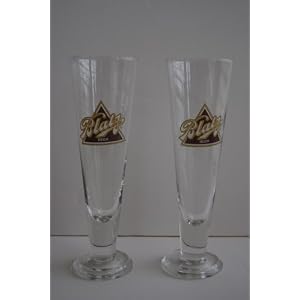 A hard-to-find set of 2 Blatz Beer tall (22 ounce) pilsners. An instant conversation starter.